Mahakala
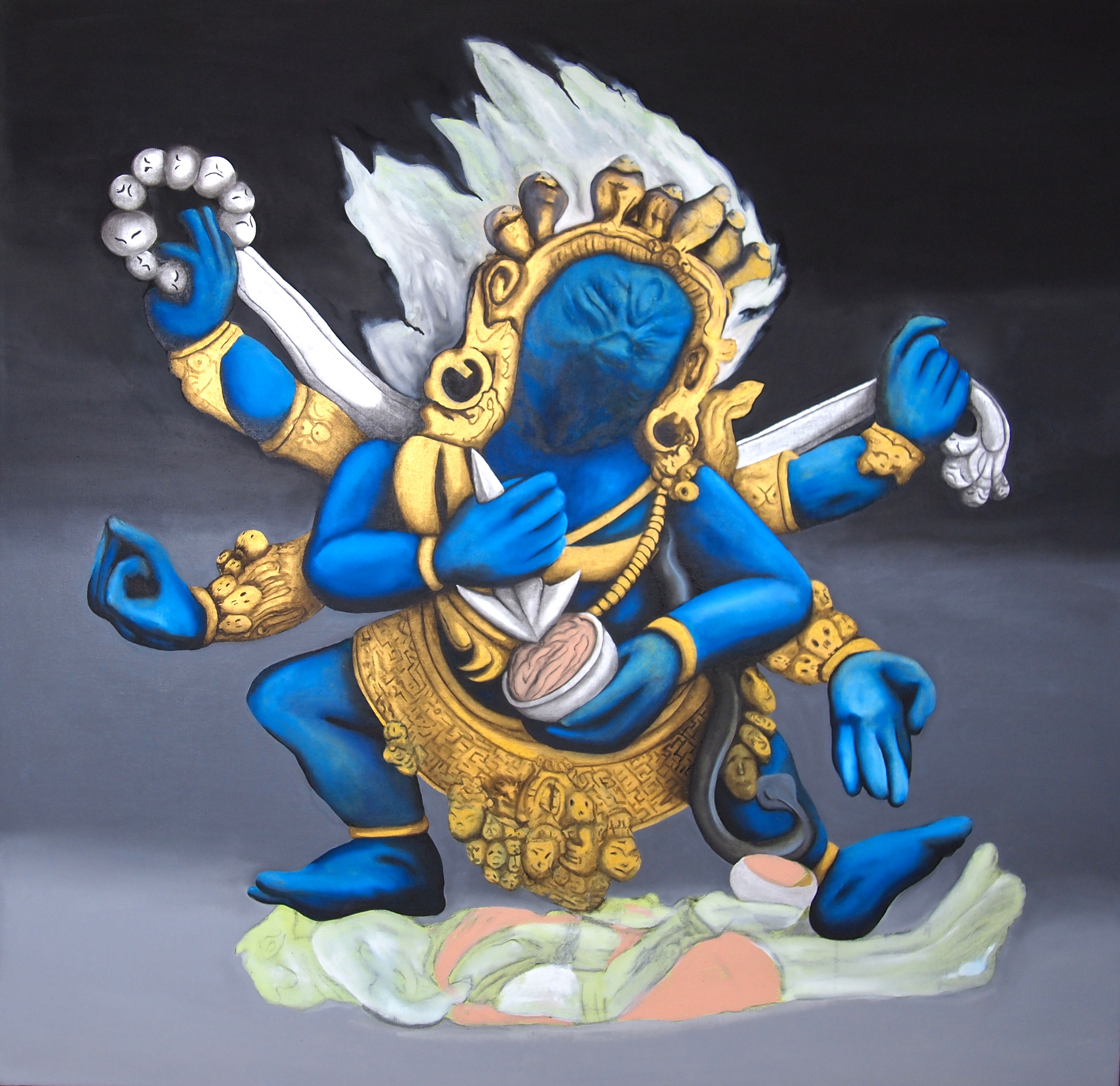
Melinda Dovák’s depiction of Mahakala emerges as a striking exploration of fierce compassion, sacred guardianship, and spiritual transformation. Grounded in Tibetan and Nepalese Buddhist traditions, Mahakala—whose Sanskrit name translates to “The Great Black One”—is not a force of destruction, but the ultimate protector deity: a wrathful embodiment of awakened wisdom whose terrifying form exists solely to dissolve obstacles, dispel ignorance, and shield sentient beings from internal and external harms.
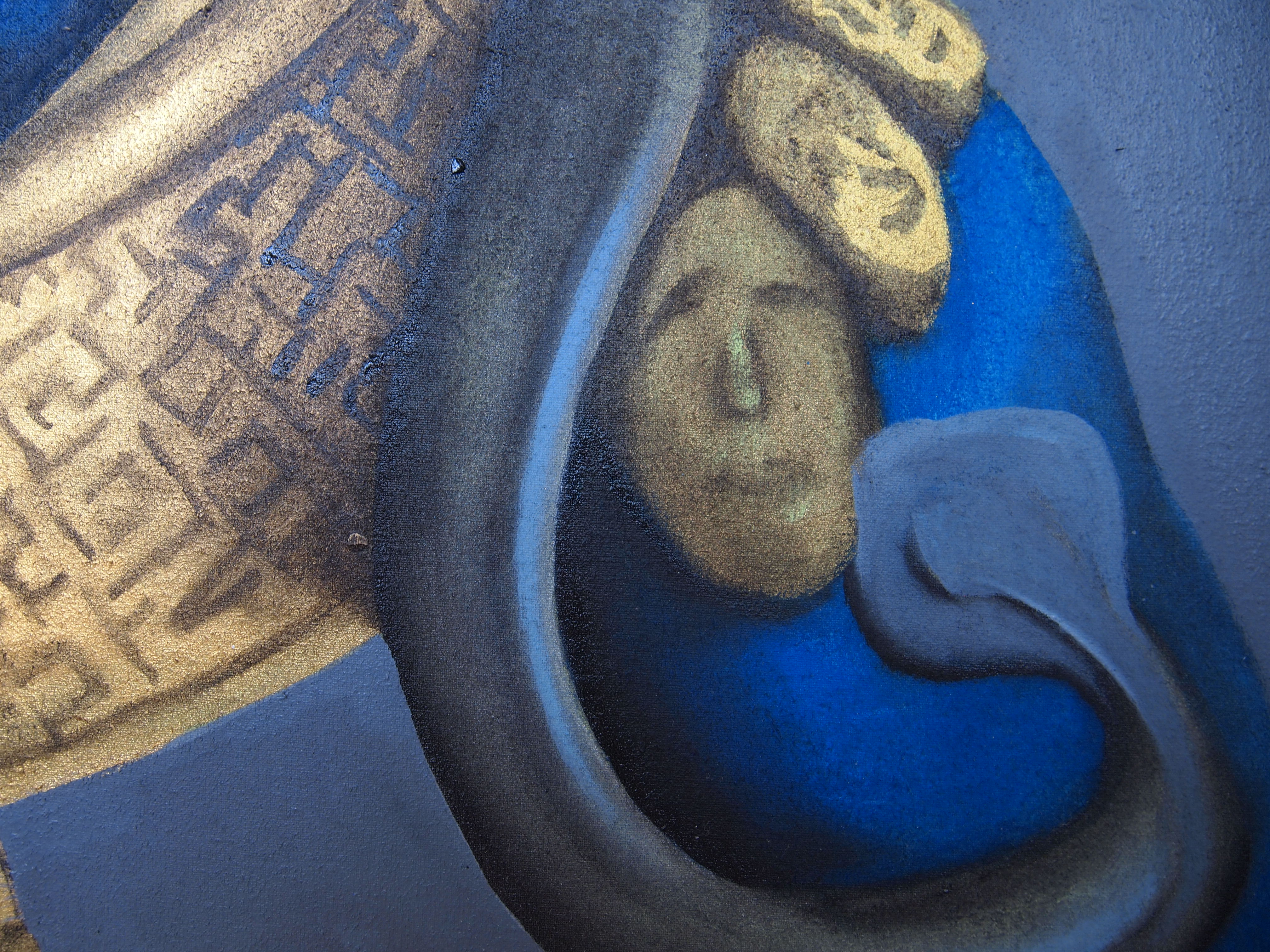
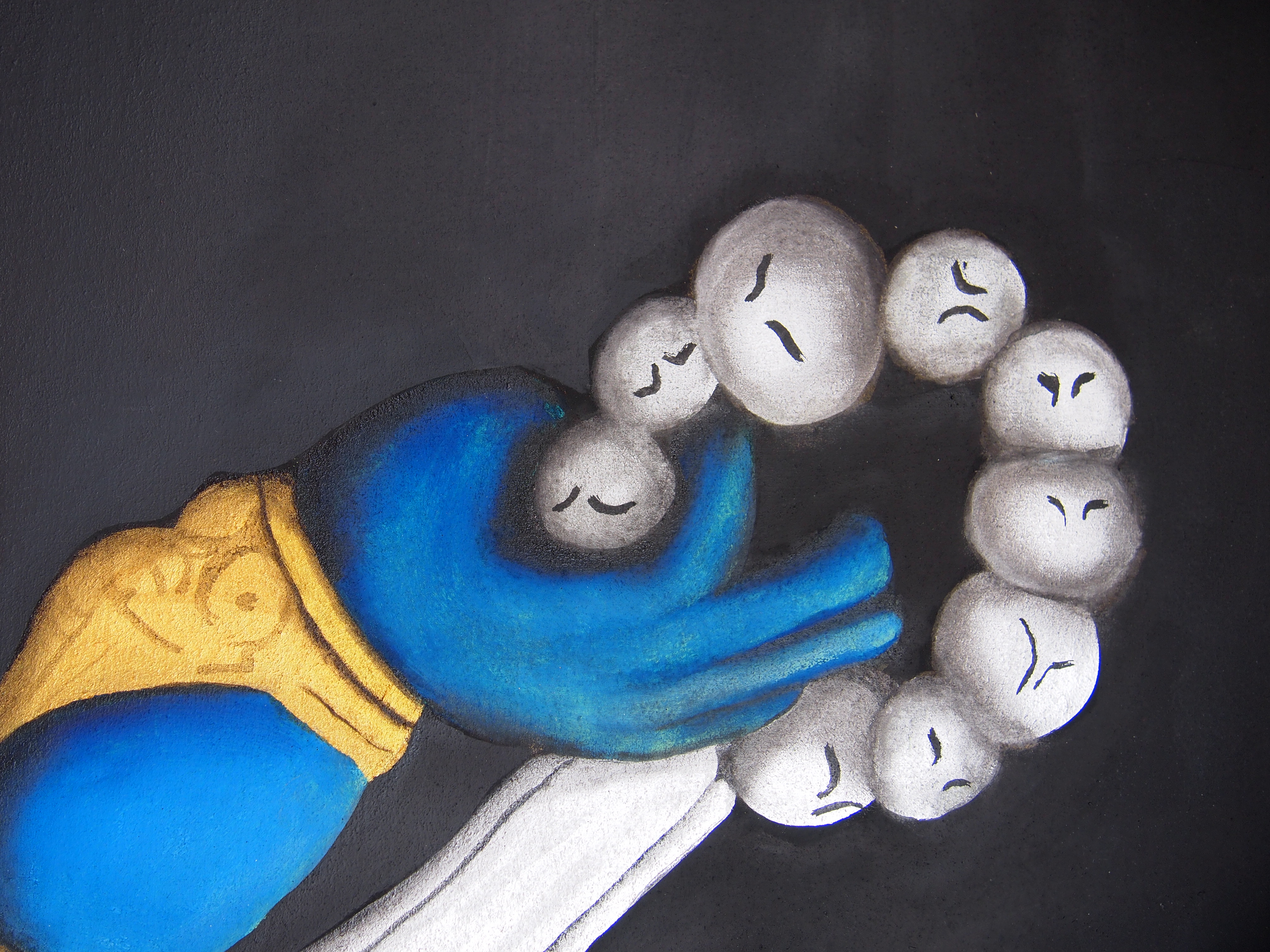
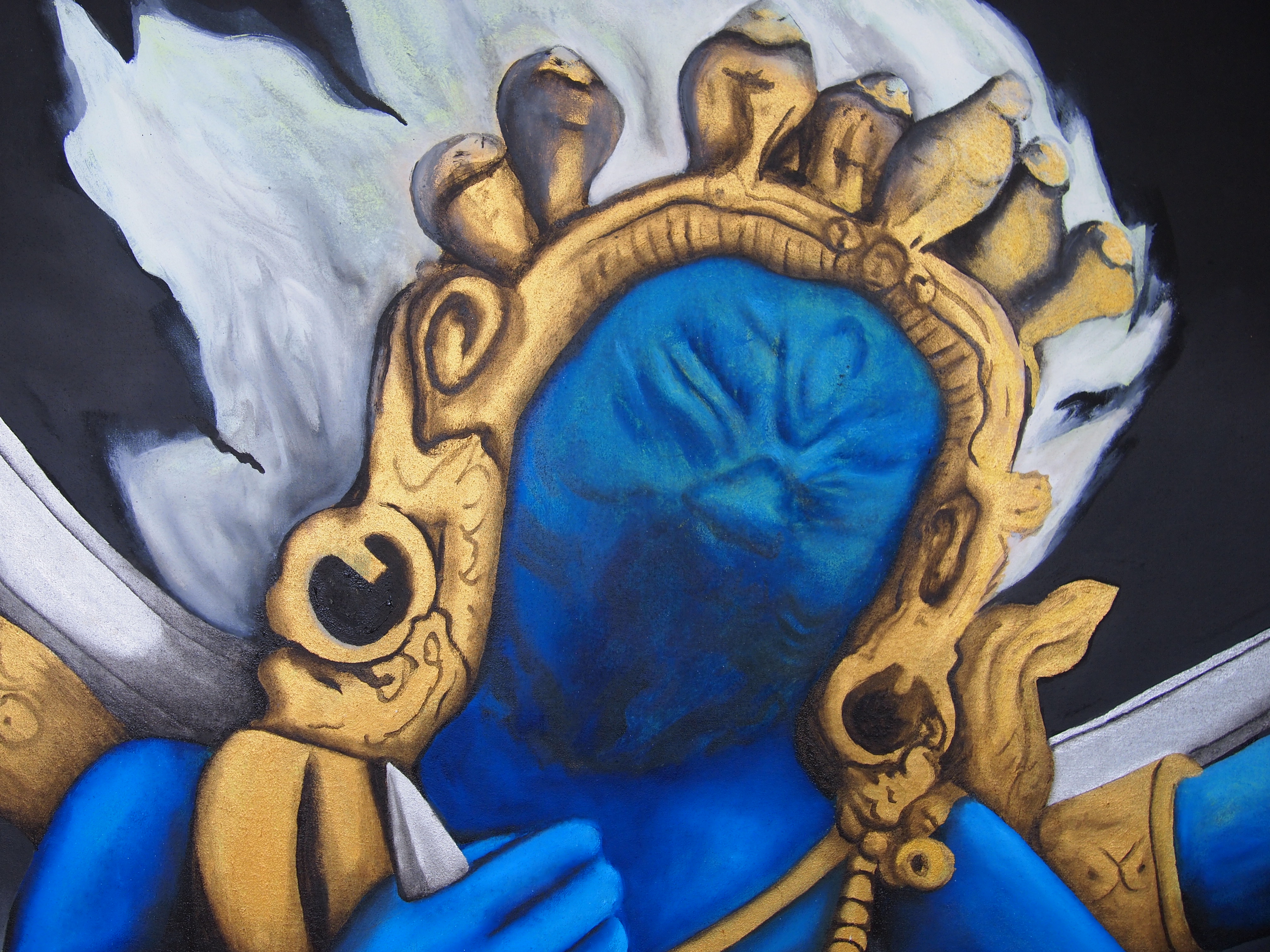
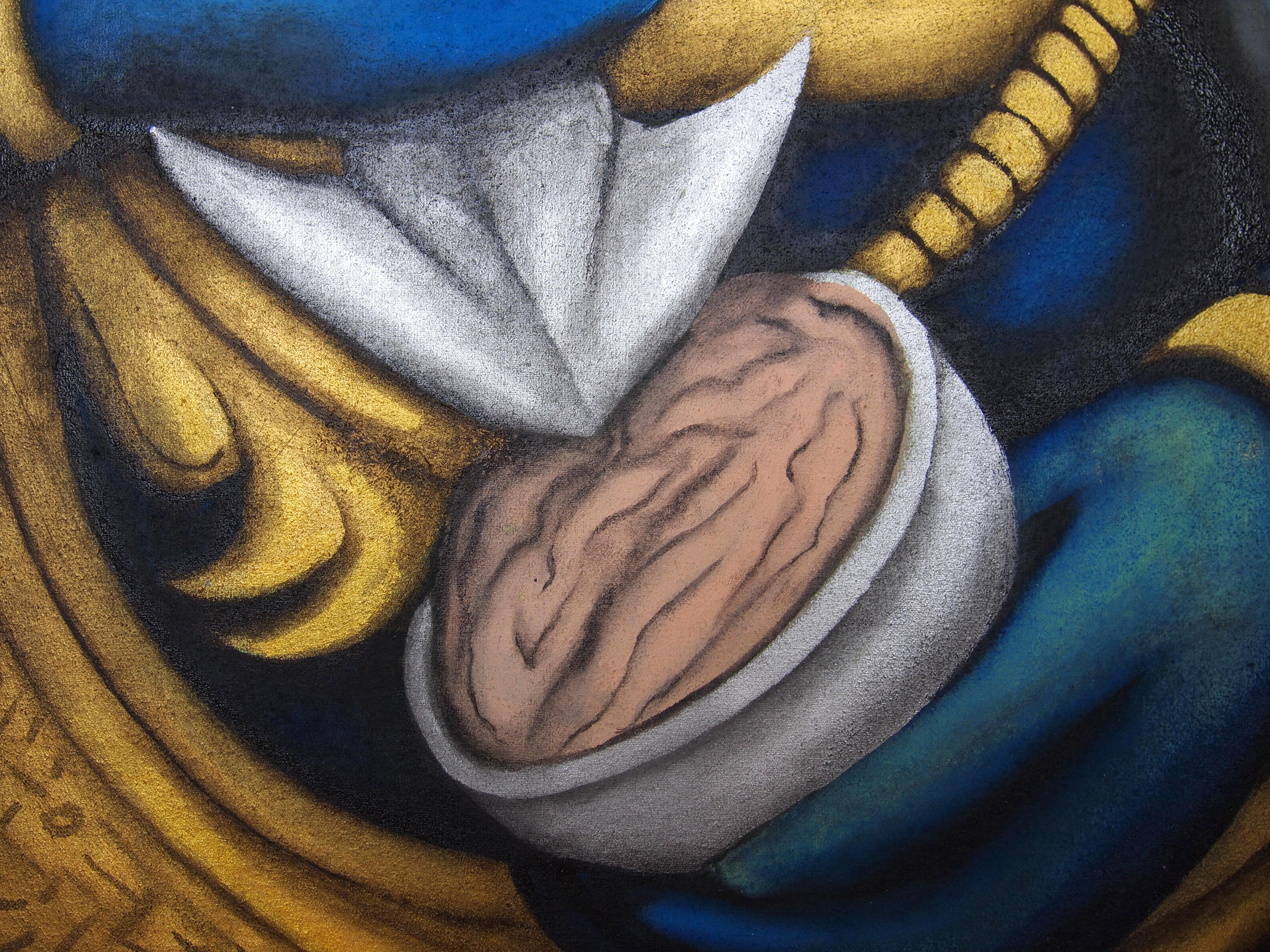
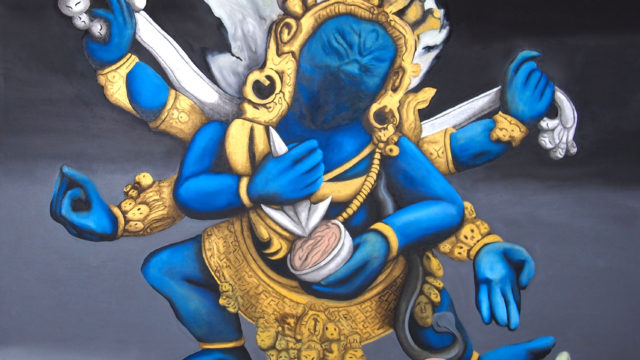
In Dovák’s composition, Mahakala is rendered in an electric, intense shade of lapis blue that leaps dynamically from a dark, brooding backdrop. His multi-armed form dances atop a recumbent figure, echoing the traditional iconography where the corpse beneath his feet symbolizes the complete eradication of ego and negative tendencies. With six outstretched arms radiating outward, he holds sacred attributes: the curved cleaver that slices cleanly through attachments and delusion, alongside the skull cup containing the transformed essence of worldly poisons. Above his crown of strung skulls—representing the alchemy of converting the five human sufferings into the five transcendent wisdoms—a halo of silver-white light surges upward, contrasting vividly with the divine golden ornaments that adorn his body.
Dovák balances the deity’s fearsome energy with a refined, contemporary painterly control. The intense contrast between the vibrant cyan-blue skin, gleaming gold filigree, and deeply muted background creates an almost kinetic energy on the canvas. Placed traditionally opposite entrances to guard sacred spaces, Mahakala here becomes a powerful, modern sanctuary piece—a visual anchor of uncompromising protection, strength, and enlightened compassion.